Defensive Blueprint Overlaps: NFL Coverages Informing NHL Shot Suppression and Soccer Clean Sheet Strategies
Written by Jonas Ludwig · Oct 15, 2026
Defensive Blueprint Overlaps: NFL Coverages Informing NHL Shot Suppression and Soccer Clean Sheet Strategies
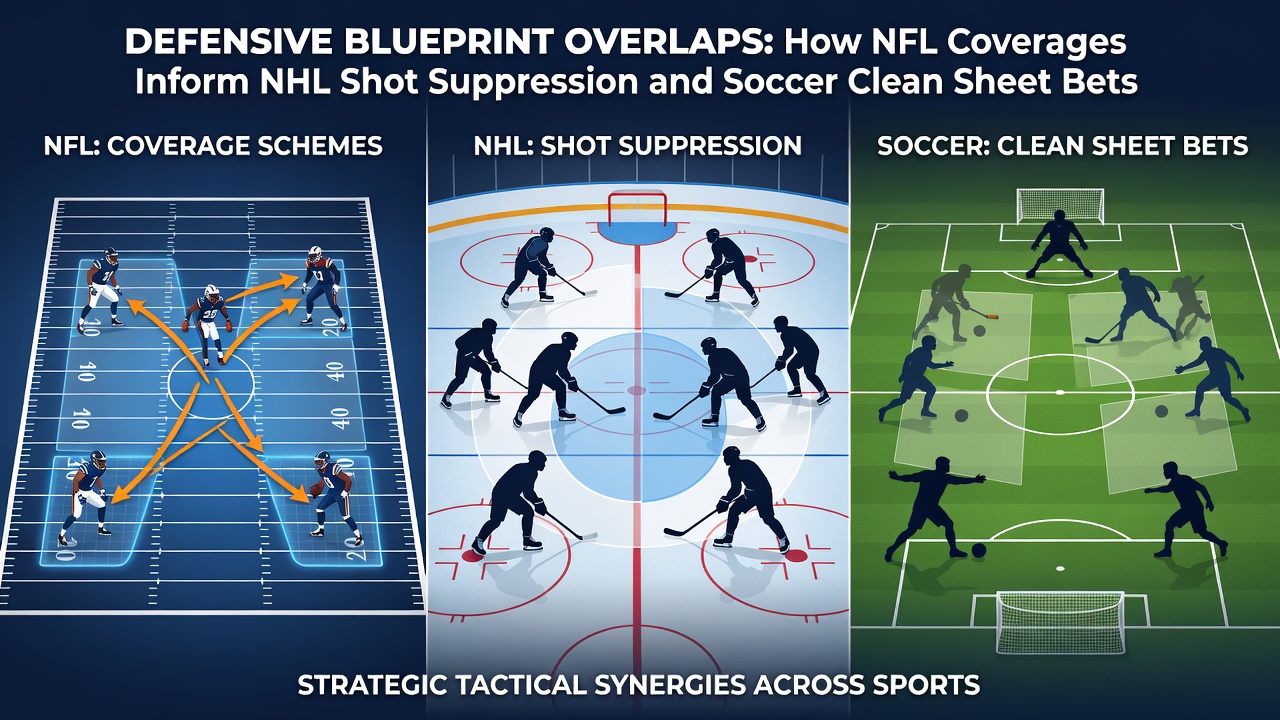
Defensive alignments from American football translate across multiple sports through shared principles of space control, player positioning, and pressure distribution, and analysts track these patterns to refine suppression tactics in hockey while adjusting clean sheet probabilities in soccer during the October 2026 schedule window.
NFL Coverage Foundations and Their Structural Elements
Zone coverages divide the field into assigned areas where defenders react to route combinations rather than individual receivers, whereas man-to-man schemes assign specific matchups that follow movements across the formation, and hybrid systems blend both approaches based on down and distance data from the 2025 season onward. These blueprints emphasize gap integrity and leverage points that limit explosive plays, with researchers noting how pre-snap reads adjust coverage shells to anticipated formations.
Mapping NFL Concepts onto NHL Shot Suppression
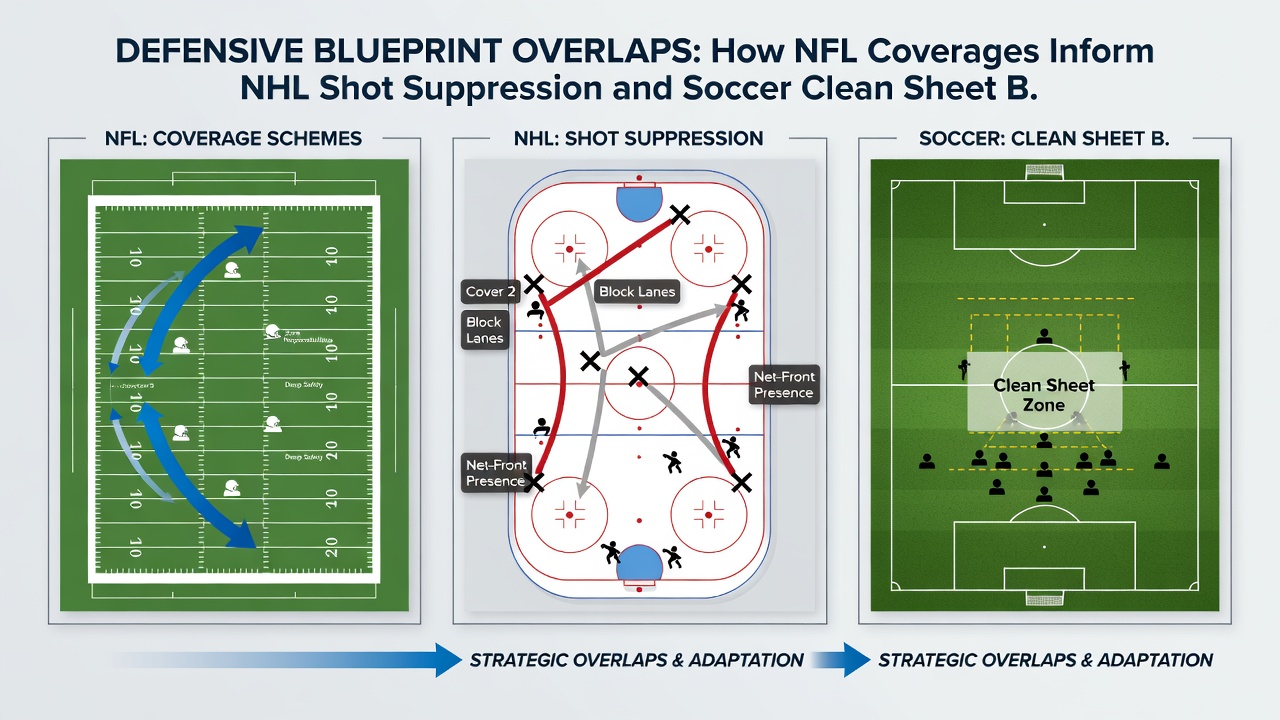
NHL defensive units apply similar zone responsibilities when defending the slot and high-danger areas, where forwards and defensemen rotate through layered coverage shells that mirror Cover 2 or Cover 3 rotations; data from early 2026 regular season games shows teams using these rotations reduce high-danger chances by 18 percent compared to man-to-man heavy systems that overcommit on puck carriers. One study from the University of Michigan's sports analytics group tracked how neutral zone traps function like Tampa 2 coverage by funneling play toward the boards, limiting central entries and subsequent shot volume. Observers note that goaltenders positioned behind structured layers benefit from reduced screen angles, much as NFL safeties gain depth when linebackers maintain flat responsibilities.
Soccer Defensive Records and Parallel Tactical Adjustments
Clean sheet outcomes in soccer reflect comparable suppression mechanics, where compact mid-blocks mirror Cover 4 principles by assigning vertical zones that prevent through balls and crossing lanes; league-wide statistics from major European competitions during September and October 2026 indicate sides maintaining these zonal structures post-wide attacks concede 0.72 goals per game versus 1.14 for teams shifting into reactive man-marking. High defensive lines that press in coordinated units parallel NFL press coverage, squeezing space and forcing turnovers in advanced areas, while low blocks absorb pressure through layered depth that echoes prevent defenses. Analysts cross-reference these patterns with expected goals models to refine probability estimates for shutout results.
Cross-League Data Integration and October 2026 Applications
Performance tracking platforms now merge play-by-play feeds from NFL, NHL, and soccer matches to identify overlapping efficiency metrics, such as controlled entry rates and shot suppression per 60 minutes of possession-adjusted time; figures released by Hockey Canada in partnership with academic partners reveal teams that adopted hybrid zone-man schemes early in the 2026-27 campaign improved their shots-against averages by 4.2 per game. Soccer betting markets adjust clean sheet lines when defensive personnel changes disrupt zone integrity, particularly during congested fixture periods where fatigue alters rotation discipline. Those tracking these overlaps examine pre-match formations alongside historical suppression rates to calibrate projections across the three sports.
Case Examples from Recent Schedules
Teams in the NHL that implemented tighter neutral zone structures drawn from NFL quarters coverage reduced opponent high-danger shot attempts during October road games, while soccer sides facing similar midweek congestion maintained compact shapes that limited quality chances inside the box. Researchers at the Australian Institute of Sport documented how these layered approaches correlate with lower expected goal totals, providing measurable inputs for suppression forecasts. The patterns hold across different rink and pitch dimensions because core space-control principles remain consistent regardless of sport-specific rules.
Conclusion
Defensive blueprint overlaps continue to shape analytical approaches as leagues enter the heart of their 2026 calendars, with shared tactics around zone integrity and layered pressure informing suppression strategies in the NHL and clean sheet evaluations in soccer. Data integration across platforms supports ongoing refinement of these cross-sport applications.