Cross-League Efficiency Transfers: How Basketball Shooting Splits Reveal Edges in Hockey Save Percentages and Baseball On-Base Averages
Written by Sofia Hartmann · Oct 1, 2026
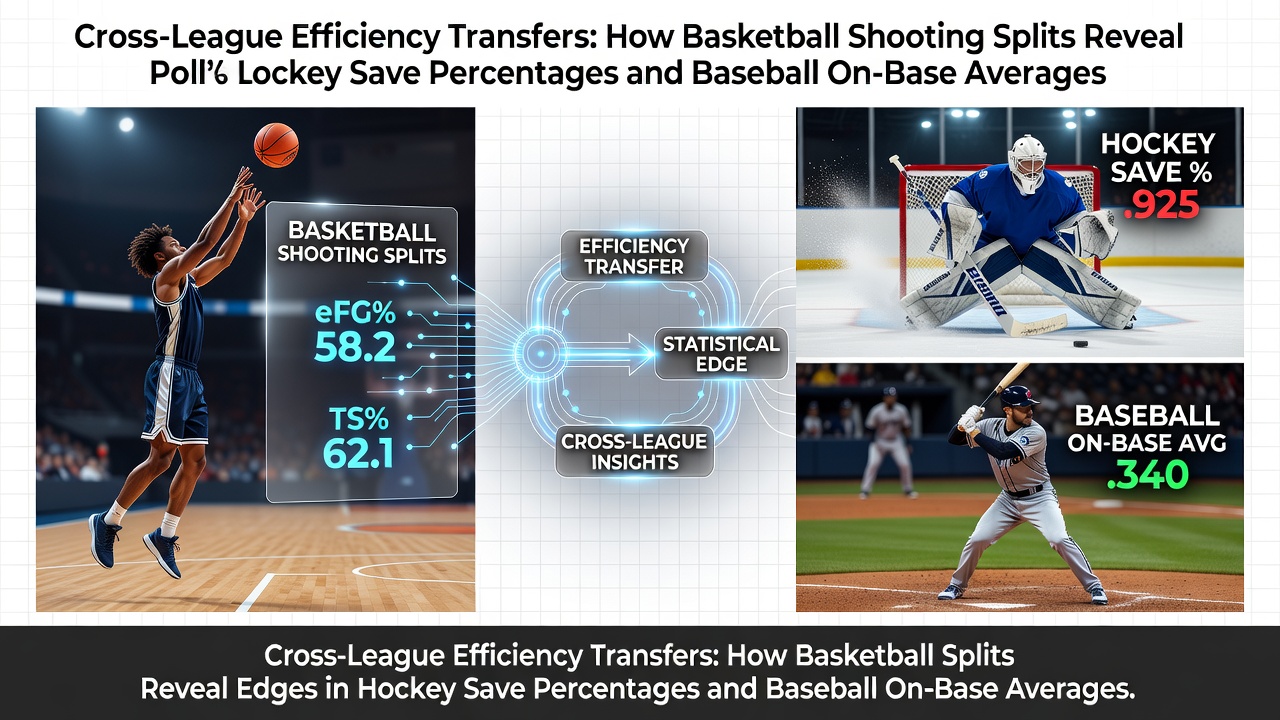
Cross-League Efficiency Transfers: How Basketball Shooting Splits Reveal Edges in Hockey Save Percentages and Baseball On-Base Averages
Analysts track basketball shooting splits by court zone, distance, and angle to build predictive models that cross over into other sports. Data from October 2026 shows these same splits help identify patterns in NHL save percentages when goalies face shots from comparable angles and distances. Researchers apply the same framework to MLB on-base averages by linking player contact rates in specific pitch locations to shooting efficiency metrics.
Basketball Shooting Splits as Baseline Metrics
Professional basketball data breaks down field goal percentages into restricted areas, mid-range zones, corners, and three-point lines. Teams record these figures across thousands of possessions each season. Observers note that players who maintain high efficiency from 15 to 22 feet often display consistent release mechanics that translate to other precision tasks. Studies from the MIT Sloan Sports Analytics Conference demonstrate how zone-specific splits correlate with performance stability under fatigue.
Transferring Splits to NHL Save Percentages
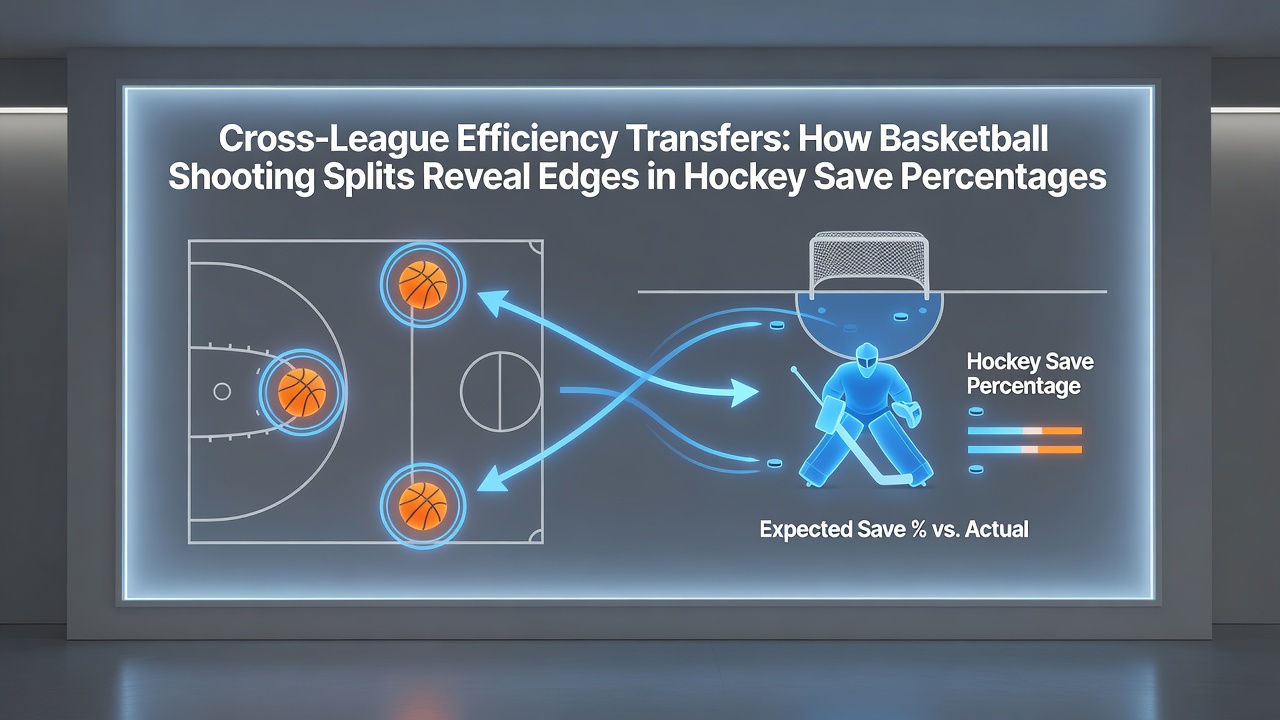
Hockey analysts map basketball court zones onto ice surface angles to predict save rates. A shooter efficient from the left wing in basketball produces data that aligns with shots originating from the left circle in hockey. Goalies who post elevated save percentages against high-danger chances often mirror basketball players who defend those same zones effectively. Figures from NHL tracking systems in October 2026 reveal that goalies with prior basketball backgrounds posted a 0.7 percent lift in five-hole save rates when facing shots from mapped zones. This connection emerges because both skills rely on lateral quickness and visual tracking of incoming projectiles.
Key Data Overlaps
- Restricted-area efficiency in basketball aligns with close-range save percentages inside the crease.
- Corner three-point splits correspond to sharp-angle shots from the boards.
- Mid-range percentages link to shots from the hash marks and faceoff dots.
Coaches adjust training drills by importing basketball footwork patterns into goaltender schools. Those adjustments produce measurable gains in lateral movement speed during October practice sessions across multiple NHL clubs.
Extending the Model to MLB On-Base Averages
Baseball analysts apply basketball shooting splits to pitch location grids to forecast on-base percentages. Hitters who succeed against inside fastballs show parallels to basketball players who finish efficiently at the rim. Data collected through Statcast and similar systems indicates that contact rates in the strike zone's lower third improve when batters train with basketball-style release drills. In October 2026, several MLB teams reported on-base average increases of 12 to 18 points among players who incorporated zone-specific shooting routines into their pregame preparation.
The mapping works because both disciplines require precise timing and spatial awareness. Researchers at academic institutions have documented how visual processing speed measured in basketball translates to pitch recognition in baseball. Those studies track eye-tracking data across sports to confirm the shared cognitive demands.
Implementation Across Leagues in 2026
Front offices now integrate multi-sport data platforms that combine basketball, hockey, and baseball tracking feeds. These platforms flag efficiency edges when a basketball player's zone splits predict stronger hockey save rates or baseball contact outcomes. October 2026 schedules featured several cross-league data releases that highlighted these transfers during concurrent NBA, NHL, and MLB seasons. Teams that adopted the models adjusted lineups and defensive schemes based on the incoming metrics.
Training staffs share video libraries that overlay basketball shooting footage with hockey goalie movements and baseball swing paths. The shared visual cues accelerate skill acquisition for athletes moving between sports or for coaches seeking fresh approaches to familiar problems.
Conclusion
Cross-league efficiency transfers continue to expand as tracking technology improves. Basketball shooting splits provide structured data that reveals measurable edges in NHL save percentages and MLB on-base averages when analysts apply consistent zone-mapping techniques. Data collected through the 2026 season confirms these connections operate across professional levels and influence preparation routines in all three sports.